Indigenous graduation celebration: Meet 3 grads who plan to reshape their fields
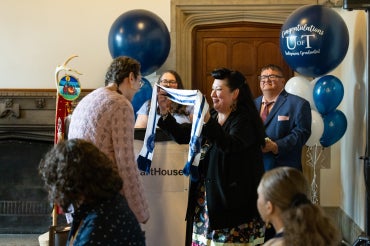
Jenny Blackbird, the resource centre and programs co-ordinator at First Nations House Indigenous Student Services, presents Adrianna Lewis with an Indigenous stole at a pre-convocation graduation celebration in May (photo by Johnny Guatto)
Published: June 10, 2026
As they graduate from the University of Toronto, Rose Esplen, Tristan Gosselin and Adrianna Lewis are determined to play a role in reshaping their chosen fields – from medicine and law to librarianship.
The three are among 19 Indigenous students who gathered at Hart House in May for a pre-convocation graduation celebration.
“Graduation is not the end, it’s a transition,” said Verne Ross, former senior lead at First Nations House and former assistant professor at U of T’s Centre for Indigenous Studies, at the event.
“It’s a time for reflection on the journey that has brought us all here and time to look ahead to all the possibilities that await us.”
U of T News spoke with Esplen, Lewis and Gosselin about their U of T journeys and what lies ahead.
Rose Esplen
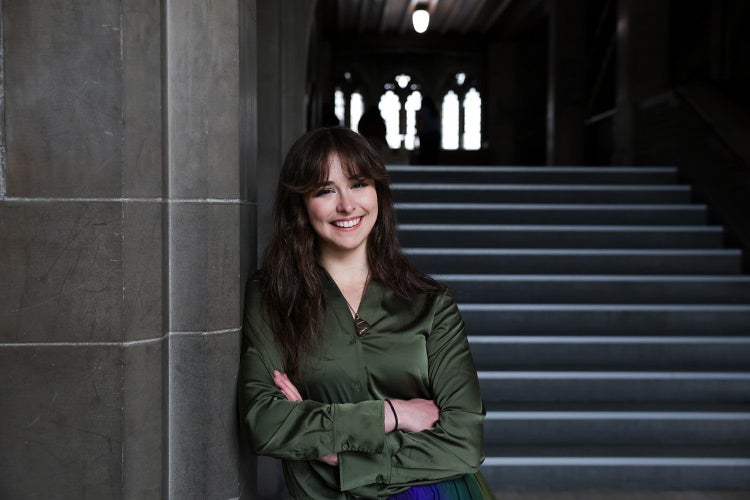
Esplen moved from British Columbia to attend U of T, taking on a demanding double major and joining the Varsity Blues women’s water polo team after only a year of playing the sport.
Her attitude was deliberately ambitious.
“I didn’t push myself in a lot of ways,” said Esplen of her high school years in Cloverdale, B.C., about 12 hours from her ancestral territory of Gitsegukla, where she is Fireweed Gitxsan on her mother’s side.
“I decided I’m going to throw myself into the deep end and see if I can swim. Luckily, I could swim – and I did.”
Esplen graduates from the Faculty of Arts & Science on June 15 with a double major in neuroscience and physiology with a citation in French – and is now headed for medical school at Queen's University.
“I believe I can make a difference not only in medicine overall, but also in terms of the Indigenous pathways in my community and I want to bring pieces of my community with me.”
She credits the Varsity Blues for providing her with structure, routine and community, and First Nations House for keeping her grounded and connected.
“I had a place to go and I had people to reach out to if I needed.”
Tristan Gosselin
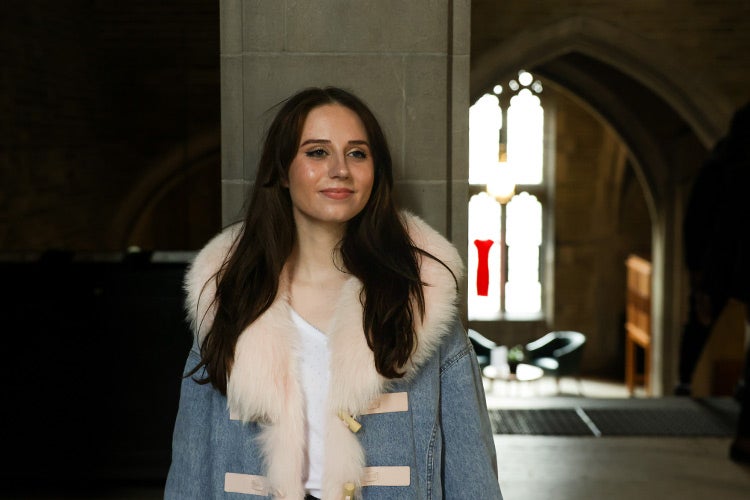
Gosselin plans to become a lawyer who works in Indigenous justice – specifically land claims.
“I'm a citizen of the Manitoba Métis Federation and I would like to work towards restoring our rights to our traditional territory,” said Gosselin, who is graduating from the Faculty of Arts & Science with a double major in Indigenous studies and religion on June 10.
“That's very important to me. So, that's one of my biggest reasons for going into law."
She decided to attend U of T after receiving the Victoria College Opportunity Award and quickly found her community at First Nations House.
“Your friends are there and different supports there for you,” she said. “And it's such a small community that you really know everybody.”
Gosselin was also an executive member of the Indigenous Students Association and co-founded an academic journal called the Bobbi Lee Journal, a collection of Indigenous knowledge that seeks to address systemic barriers that exclude Indigenous Peoples from publicly sharing their creative and academic works.
The journal is named after Bobbi Lee Indian Rebel, the 1975 autobiographical work of Lee Maracle – a celebrated writer, activist and mentor to students at U of T.
Adrianna Lewis
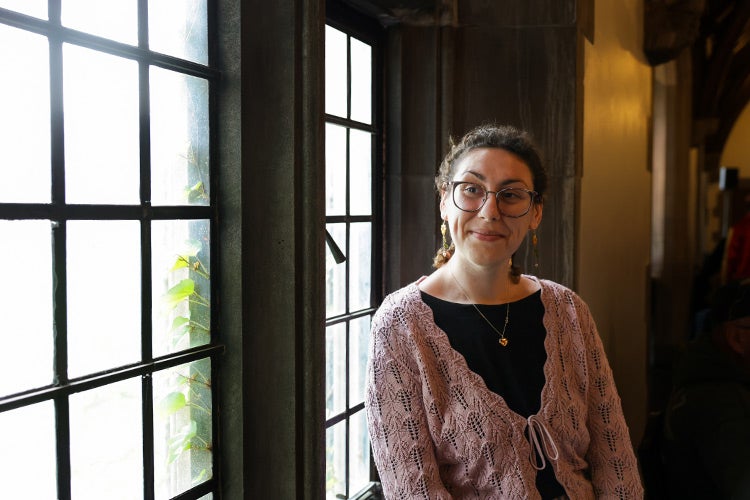
Lewis wants to change how knowledge about Indigenous Peoples is classified, stored and protected.
She says she was first drawn to librarianship during her bachelor of education, where she worked with Indigenous materials at the education library at Queen’s University.
“Once people found out I was Indigenous, I became a person people came to for book recommendations,” says Lewis, who graduated June 5. “It was fun.”
She chose U of T’s master of information program at the Faculty of Information for the Toronto Academic Libraries Internship, which guaranteed hands-on work during her degree.
She worked in the research and education department on the fourth floor of Robarts Library and was a member of the Indigenous Metadata Working Group, helping to push for changes to terminology by replacing colonial or racist terms with community-preferred names. She also helped identify a book containing sacred ceremonial knowledge that’s now being returned to the community.
Lewis, who grew up on Tyendinaga Mohawk Territory near Belleville, Ont., said the connections she made through First Nations House and her program eased the transition from a reserve of about 5,000 people to Toronto.
“I'm definitely much more confident, not only in myself and who I am, but just in the experiences and knowledge I bring,” she said.
Newsletter