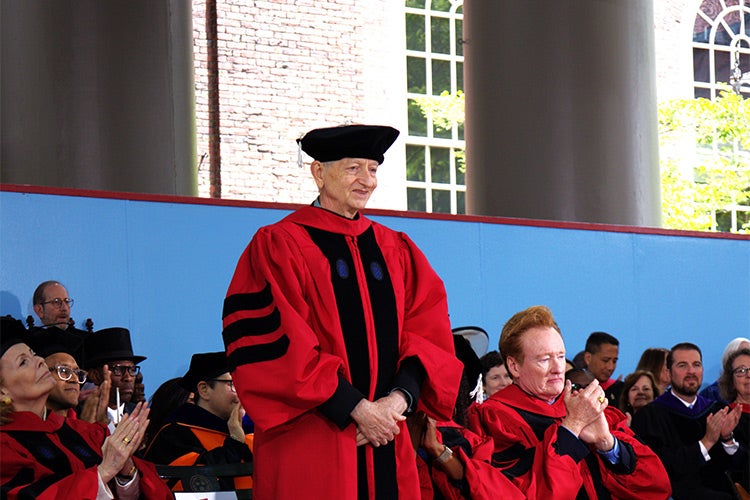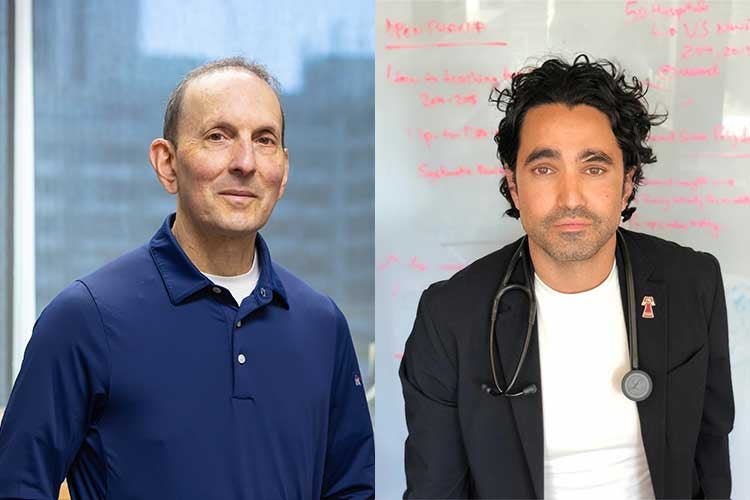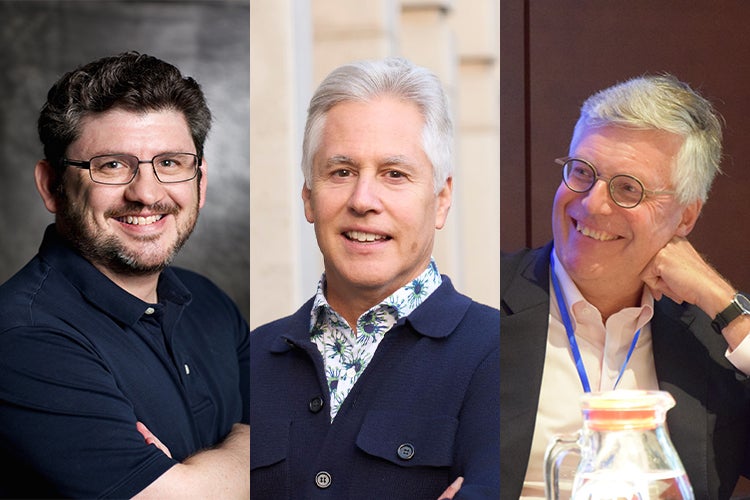
(L-R) Roberto Abraham, John Borrows and Nicholas Terpstra (photos by May Truong and supplied images)
Roberto Abraham, John Borrows and Nicholas Terpstra named University Professors
Published: June 1, 2026
Three University of Toronto faculty members have been appointed University Professors, a designation that represents the university’s highest and most distinguished academic rank.
University Professors are recognized for unusual scholarly achievement and pre-eminence in a particular field of knowledge. The number of University Professor appointments generally doesn't exceed two per cent of tenured faculty.
The newest members of this prestigious group are:
- Roberto Abraham of the David A. Dunlap department of astronomy and astrophysics in the Faculty of Arts & Science: An internationally recognized astrophysicist, Abraham's work has transformed our understanding of how galaxies form and evolve. Renowned for combining conceptual insight with technical innovation, he has developed tools that are helping answer fundamental questions about galaxy formation and dark matter. The co-founder of the Dragonfly Telephoto Array, he is now leading the development of MOTHRA (the Modular Optical Telephoto Hyperspectral Robotic Array), a next-generation facility in Chile.
- John Borrows of the Henry NR Jackman Faculty of Law: A leading scholar of Indigenous law, Borrows, who is Anishinaabe/Ojibway and a member of the Chippewas of Nawash First Nation, is renowned for his research on the revitalization of Indigenous Peoples’ laws and their relationship to Canadian constitutional law, Canadian Aboriginal rights law and environmental law. The inaugural Loveland Chair in Indigenous Law, he has worked to provide educational opportunities in Indigenous legal studies, including the celebrated immersive land-based program on Indigenous law in his community in the Bruce Peninsula.
- Nicholas Terpstra of the department of history in the Faculty of Arts & Science: A leading historian of the Italian Renaissance, Terpstra's scholarship has explored topics at the intersections of politics, religion and gender. Through his influential work on civil society, religious refugees and digital humanities – including the groundbreaking DECIMA mapping project – he has transformed understanding of early modern societies while pioneering innovative spatial, sensory and digital research methods.
"The University of Toronto owes much of its reputation for excellence to its world-class professors, and I am delighted to have the opportunity to formally acknowledge the outstanding achievements of some of our finest faculty members," said Trevor Young, U of T's vice-president and provost, in a memo to the U of T community.