For U of T chemist, the magic of molecules has lasted a lifetime
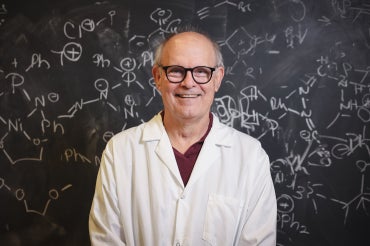
Douglas Stephan (photo by Polina Teif)
Published: November 19, 2026
Doug Stephan was first exposed to the alchemy of chemistry at age 10 while helping out in his father's drug store.
“Of course, back then, it wasn’t like today where medications are prepared and packaged for pharmacists,” says Stephan, whose father was a graduate of what is now the Leslie Dan Faculty of Pharmacy at the University of Toronto. “In those days, it was common to take an ointment base and mix the proper drug into it to make the lotion the patient needed.”
He also recalls making aspirin years later as part of an experiment at McMaster University, where he earned a bachelor of science degree. “I was really struck that I could make a product that was available in my dad’s store,” he says. “I thought, ‘Okay, this is pretty cool.’ That’s when chemistry really got my attention.”
Stephan went on to complete a PhD at the University of Western Ontario in 1980 and then spent two years working as a NATO postdoctoral fellow at Harvard University. He began his professorial career at the University of Windsor, spending more than 25 years there before joining his father’s alma mater, U of T, in 2008 – as a professor and Canada Research Chair in Inorganic Materials and Catalysis.
Over a career spanning more than four decades, Stephan – now a University Professor of chemistry in U of T’s Faculty of Arts & Science – has become one of the world’s most decorated chemists through his work in catalysis, a process in which a substance can speed up a chemical reaction without being consumed itself. His research has broadened the scope of catalysts beyond traditional transition metals, opening new avenues for chemical reactions and applications.
The impact of his work has resulted in a long list of personal honours including fellowship in the U.K. Royal Society and Royal Society of Canada, the John C. Polanyi Award from the Natural Sciences and Engineering Research Council of Canada (NSERC), a Guggenheim Fellowship and the Killam Prize. In 2023, he was named John C. Polanyi Chair in Chemistry at U of T. The following year, he was named an Officer of the Order of Canada.
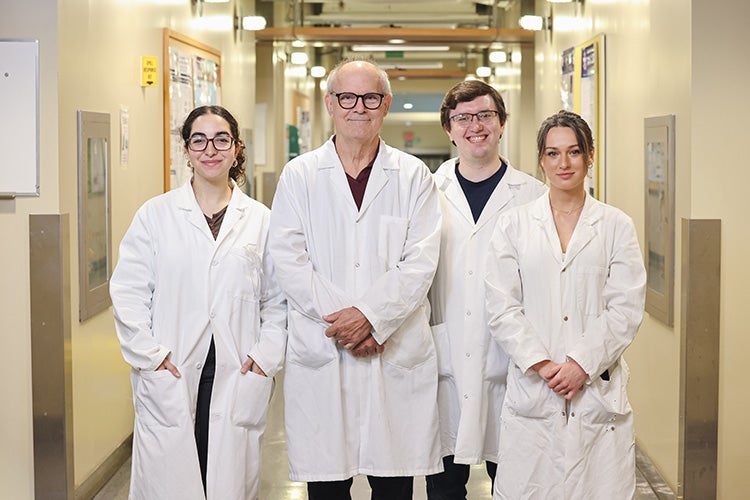
Catalysis has remained a central focus of Stephan’s research throughout his career.
In chemical terms, a catalyst works by lowering the energy barrier to a reaction, thereby enabling chemical transformations to occur more efficiently; afterwards, the catalyst can be removed from the final product.
For example, the hydrogen peroxide in your medicine cabinet is very slowly breaking down into water and oxygen; but add a catalyst like manganese dioxide and the water and oxygen separate explosively.
“In the '70s, catalysis was a very hot topic in both inorganic and organic chemistry,” says Stephan. “Then in the ‘80s, when I began my career, we were trying to make compounds that contained two different metals in order to understand how the two metals might interact and alter the other's reactivity.”
The ultimate goal, Stephan says, was to understand fundamental chemical reactivity in order to develop new and unique catalytic approaches. “Catalysis was always the motivation behind what I was working on, even if it was at a much more fundamental level in those days.”
That pursuit yielded groundbreaking results in 2006 when Stephan and collaborators published a paper in the journal Science that broadened the scope of catalysts well beyond transition metals. Until then, it was believed that only transition metals such as iron, silver and copper – which can be rare, expensive, difficult to mine or toxic – could be used in those reactions. The paper has been cited over 2,000 times, laying the groundwork for subsequent advances in metal-free catalysis.
Stephan and co-authors showed it was possible to create what they dubbed “frustrated Lewis pairs" (FLPs) comprising a “Lewis acid” and a “Lewis base” – molecules that typically bond easily. With FLPs, the two are physically prevented from combining with each other and thus are able to react with a third, intervening substance. This allows such pairs to act as catalysts and react with a variety of other molecules.
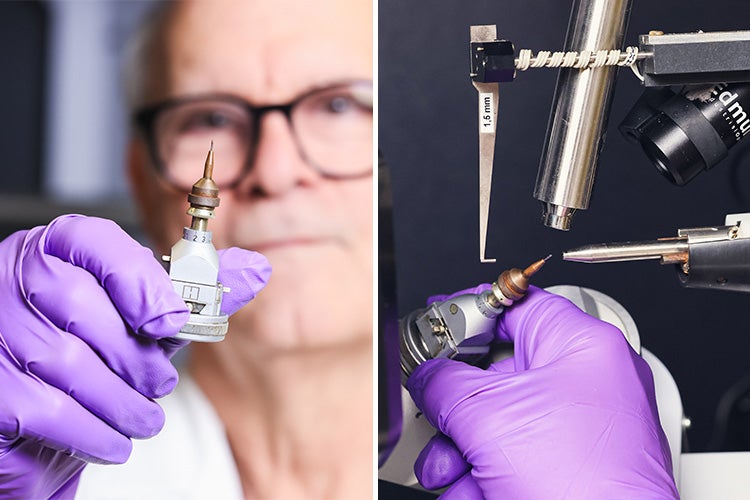
Stephan says researchers are developing a variety of applications for the novel concept.
“For example, one target is to use FLPs to convert carbon dioxide into other useful substances,” he says. “While this has been accomplished in principle, applying it to the problem of an overabundance of this greenhouse gas in our atmosphere remains a challenge. Nonetheless, this is a fruitful new area of research.
“We have 100 years of transition-metals science,” he adds. “Doing metal-free catalysis was something we thought was impossible, so FLPs have opened the door to chemistry we couldn’t do before.”
What's more, FLPs involve more readily available elements, unlike metals that have a large impact on the environment because of the extensive mining, refining and shipping required. “That means a much smaller carbon footprint," says Stephan. “That's where FLPs have great potential.”
Alongside his landmark discoveries, Stephan has empowered the next generation of researchers through his mentorship and supervision.
Nahil Al-Zuhaika, a PhD candidate who is developing new phosphorous-containing molecules, says Stephan is “truly dedicated” to the success of his students.
“He is passionate and excited about the science that we do. He always takes time to listen to us and understand where we’re coming from, while still challenging us to grow as scientists,” she says. “As his students, we have learned much more than just chemistry from him.”
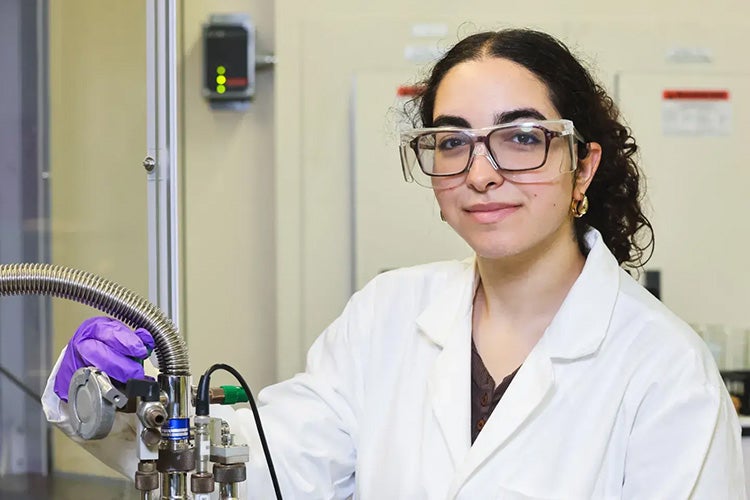
Meera Mehta, a professor of catalysis and materials science at the University of Oxford, credits her time as a PhD student in Stephan’s lab with shaping her approach to research and leadership. “It is obvious from Doug’s academic achievements that he cares about doing interesting science to the highest level,” she says. “But he was also an incredible mentor and instrumental in the successes I saw in my career. I could not have picked a better PhD supervisor to train with. He made me a better scientist and supervisor.”
The impact of Stephan’s work continues to be recognized. Most recently, he was awarded the Royal Society’s Davy Medal in recognition of his discovery of the concept of FLPs.
“I don't think you do science for the awards,” Stephan said after receiving the honour. “What's most gratifying is to have your peers nominate you.
“Ultimately what a scientist has is their reputation and the impact of their work. And if people think that it's valuable and worthy of consideration, that’s enough – that's a win.”
With files from Arts & Science News and the department of chemistry
Topics
Newsletter