From lab to stage: PhD student champions science outreach through drag
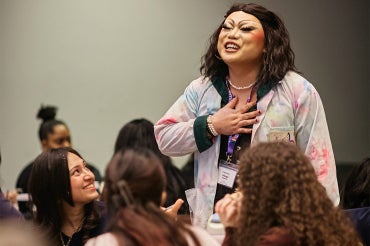
U of T PhD candidate Angelico Obille performs as drag character “Kwaga Musselle” (photo by RCIScience)
Published: May 1, 2026
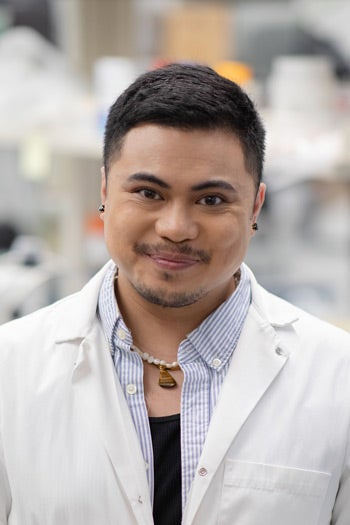
University of Toronto PhD candidate Angelico Obille wears a white lab coat while working in the Faculty of Dentistry – but adds a dress, pearls, heels, makeup and fabulous wig before “Kwaga Musselle” hits the stage.
Obille’s alter-ego is a performer in Toronto-based Science is a Drag, which was launched in 2019 by a team including U of T Temerty Faculty of Medicine alumni Samantha “Science Sam” Yammine and Geith Maal-Bared.
Science is a Drag is billed as the first and longest running science-themed drag show featuring drag artists who work in STEM.
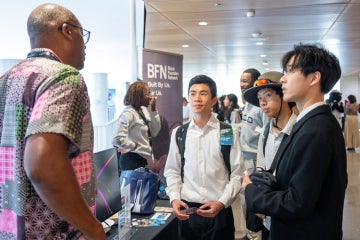
The team – which also includes Daniel Celeste (or “Ms. Medisin”), Shawn Hercules (“Rawbyn Diamonds”) and Carrie Boyce at RCIScience –helped Obille develop their performance and skills as a science communicator. They now engage audiences at bars, conferences and events, including the Ontario Science Centre’s Pride in STEM, with explanations about the unique adhesive properties of quagga mussels (hence the stage name) and how they can be used to create biomaterials for dentistry and whole-body medicine.
“I can be all of me,” says Obille, a PhD candidate in the Institute of Biomedical Engineering (BME) and the Faculty of Dentistry, of combining science and performing. “And people can see that and celebrate it.”
Obille first saw a Science is a Drag show in 2023 – at a time when they struggled with imposter syndrome. As a queer Filipino scientist, they didn’t see many people like themselves in academic spaces. Even seemingly small decisions such as whether to bring their boyfriend to a lab barbecue felt overwhelming.
“I often felt like I had to hide parts of myself in order to belong,” says Obille, who recently defended their thesis. “I didn’t always feel like my full self was welcome.”
Now it's all coming together – onstage and in the lab.
Under the supervision of Eli Sone, a professor in the Institute of Biomedical Engineering in the Faculty of Applied Science & Engineering, Obille identified a protein called Dbfp7 that is found in the freshwater quagga mussel, an invasive species that is able to cling stubbornly to surfaces underwater. The work was recently published in the Proceedings of the National Academy of Sciences.
The chemistry behind this protein has real-world implications in medicine and dentistry – particularly when it comes to creating strong, reliable adhesives that stay sticky in wet conditions.
Instead of trying to build a biomaterial from scratch, Obille took inspiration from animals who have been pulling off this feat for years.
“Nature is the world’s best engineer,” they say. “It’s had millions of years to develop innovative solutions. Why wouldn’t we learn from that?”
Looking ahead, Obille plans to pursue a scientific career while staying involved with Science is a Drag in a bid to foster a more inclusive science community.
Noting the mentorship they received from fellow performers, Obille says they hope to one day support others who may feel they don’t fit in.
“I want queer scientists to see that they can be themselves in science,” Obille says. “We benefit from people asking questions that others might not think to ask. We need that diversity.”
Topics
Newsletter