English prof steps into the ring ... to teach the storytelling elements of professional wrestling
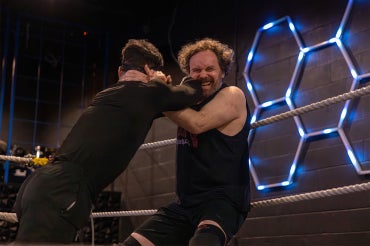
Daniel Tysdal, a professor of English at U of T Scarborough, signed up for classes at a Toronto gym to better understand the world of professional wrestling, which he views as a form of art (photo by Don Campbell)
Published: April 2, 2026
Students in an English course at the University of Toronto are stepping into the ring – literally – to explore the storytelling, performance and craft of professional wrestling.
Taught by Daniel Tysdal, a professor in the department of English at U of T Scarborough, the course blends literary analysis with hands-on experience, asking students to see wrestling not just as sports entertainment, but as a complex narrative shaped by character, structure and audience engagement.
The idea for the course grew out of Tysdal’s unexpected return to wrestling during the early days of the pandemic. A fan as a child, he rediscovered it while watching All Elite Wrestling (AEW) at home with his wife.
What began as casual viewing quickly turned into a deeper fascination – and a subject he began to explore in his own writing.
“I just started to see it as an art form,” says Tysdal, an award-winning poet and short fiction writer. “Like fiction or film, when it comes down to it, pro wrestling is all about storytelling.”
In the ring, matches generally follow a seven-part narrative arc, says Tysdal, moving from early set-up and rising tension to a dramatic climax and resolution, with wrestlers using character, pacing and moves to tell the story.
“You’re telling a story with your body, and the crowd plays a big part of that story.”
That insight became central to the course. Tysdal’s students analyze wrestling through literary frameworks, examining how matches follow recognizable narrative arcs and how characters – heroes, heels (the bad guys) and everything in between – drive the action. They also explore “kayfabe,” the convention of presenting staged events as real and how that blurring of fiction and reality shapes audience engagement.
“It’s just like watching a good play,” says Tysdal. “You’re not thinking these are actors, you just get swept up in the story.”
The course also combines theory with practice. Alongside readings that include poetry, comics and academic essays, students watch weekly wrestling broadcasts, write reflections and complete both critical and creative assignments. Some analyze themes such as race or gender in wrestling, while others create original characters or stories.
For Rekha Samlal, a fourth-year English and creative writing student, the course offered a new perspective on storytelling.
“I didn’t have a background in wrestling at all, but I was intrigued,” she says.
Over the semester, she found herself drawn into the narratives unfolding on screen, following characters and storylines week by week.
“I was very confused at first, but then you get heavily invested. You want to know what will happen next,” she says.
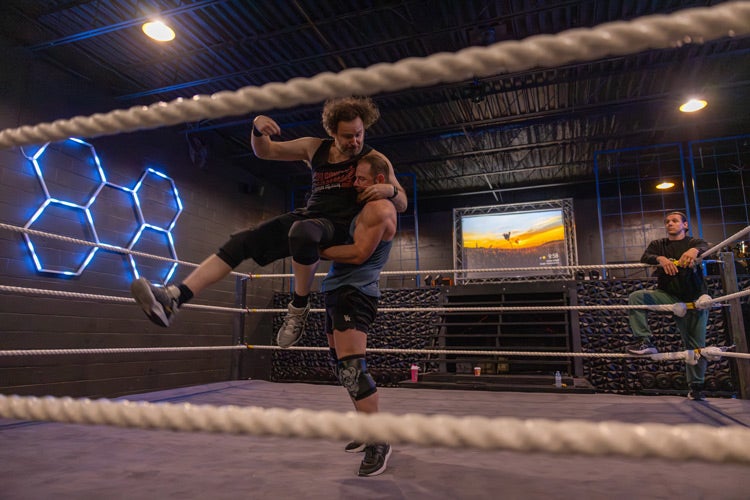
Like her classmates, Samlal experienced wrestling in person. As part of the course, students attend a live event and visit a gym to learn basic techniques and see firsthand what wrestlers go through.
“It made me realize, yeah, it might be staged, but what they put their bodies through is still real,” she says. “They’re still hitting the ground; they’re still executing these moves.”
Tysdal would know. Wanting to better understand this form of storytelling, Tysdal had previously signed up for classes at Superkick’d, a Toronto wrestling gym just a short walk from his home. It was there he stepped into the ring for the first time and quickly got hooked. What he found was not just performance, but a demanding physical and creative discipline.
“The first thing you learn is how to fall properly,” he says. “Everything you do is built around that.”
Training involves repeated drills: learning how to land safely, how to move with a partner and execute sequences that look violent but are carefully controlled. It is physically exhausting, combining strength training, cardio and choreography.
Tysdal has since developed his own in-ring persona, “‘A+’ Mr. Croxtin,” a reluctant teacher turned unlikely hero, which he debuted at the OssFest street festival.
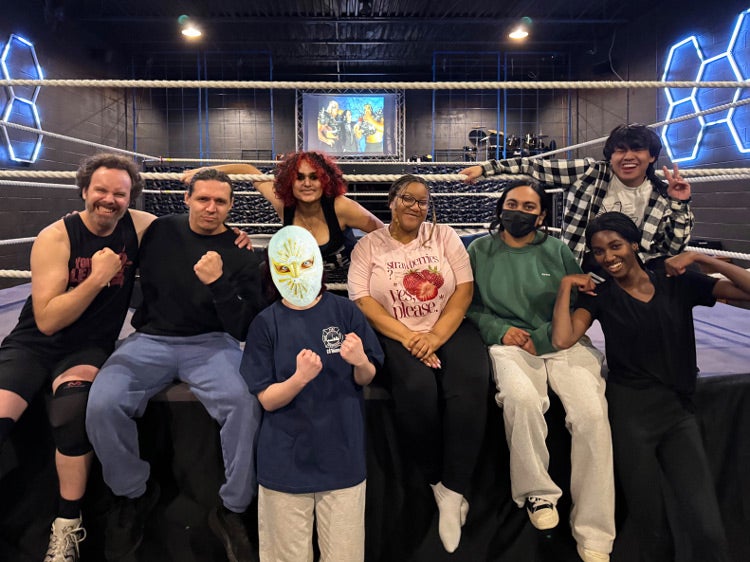
Tysdal says the combination of intellectual and physical engagement is key to understanding wrestling, which, he says, offers a unique way to think about storytelling because it exists at the intersection of sport, theatre and popular culture.
“Pro wrestling is very political. It’s a great vehicle for talking about class, gender, race, all of these topics,” he says, adding that the industry has also become more progressive and inclusive in recent years.
The goal of the course, he stresses, isn’t just to studying wrestling, but to take it seriously as an art form – one that reveals how stories are constructed, performed and experienced.
“Once you start looking at it that way, you realize there’s something here for everybody.”
Topics
Newsletter