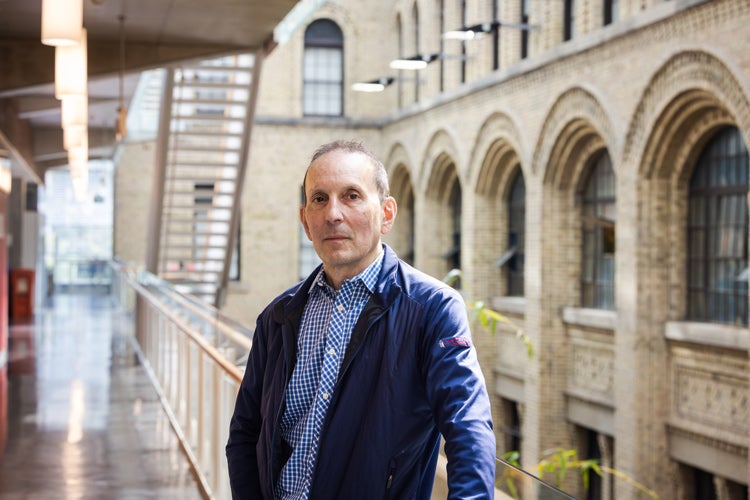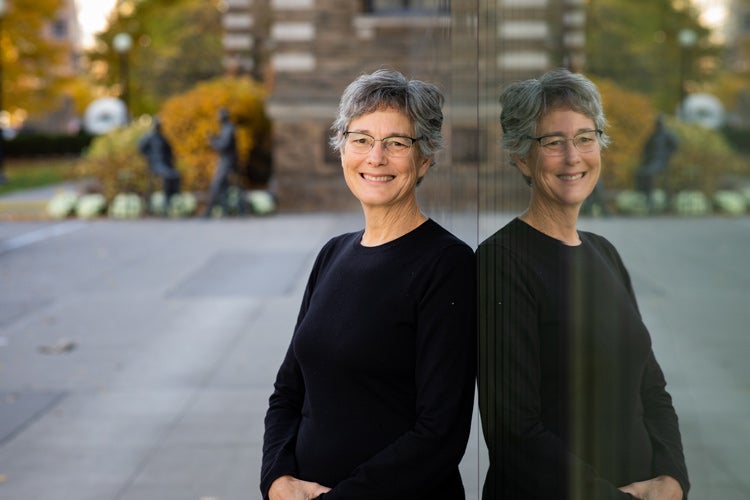
Raquel Urtasun, left, and John Rubinstein (photos by Polina Teif and supplied image)
Raquel Urtasun and John Rubinstein elected fellows of U.K.'s Royal Society
Published: August 11, 2026
Raquel Urtasun, professor of computer science in the University of Toronto's Faculty of Arts & Science, and John Rubinstein, senior scientist at the Hospital for Sick Children and a professor of medical biophysics and biochemistry in U of T's Temerty Faculty of Medicine, have been elected 2026 Fellows of the Royal Society, the U.K.'s national academy of sciences.
The world’s oldest independent scientific academy in continuous existence, the Royal Society recognizes individuals who have significantly impacted science through its fellowship program. Fellows are elected based on their substantial contributions to fields including mathematics, engineering science and medical science.
Urtasun's research spans machine learning, computer vision and robotics, with a focus on generative AI for the physical world and the next generation of self-driving technology. She is the founder and CEO of autonomous driving company Waabi and a co-founder of the Vector Institute for Artificial Intelligence.
“Raquel has fundamentally shaped how machines perceive and reason about the physical world, and she has done so while building one of the most ambitious AI companies in Canada,” said Eyal de Lara, chair of the department of computer science. “The Royal Society's recognition reflects both the depth of that scholarship and the conviction with which she has translated it into real-world impact.”
Rubinstein was honoured for his contributions to the development of methods for three-dimensional electron microscopy of biological molecules, including innovations in specimen preparation, imaging and computational image analysis. His research has advanced our collective ability to study the structures of molecules in our body.
“To understand life at a molecular level we must be able to see the 3D structures of the proteins and protein complexes that carry out biological processes in cells,” Rubinstein said. “Viewing them clearly enough to determine the position of individual atoms allows us to design all-new medicines.”